Real costs
What not protecting your paint actually costs
Protection looks expensive until you put it next to the alternative. Nobody ever does, so here it is.
Protection looks expensive until you put it next to the alternative. Nobody ever does, so here it is.
Every conversation about ceramic coating or paint protection film eventually reaches the same place: it's a lot of money for something you can't see.
That's a fair objection. Here's the part that usually doesn't get said — the comparison isn't protection versus nothing. It's protection versus what you'll spend anyway, later, when it isn't optional.
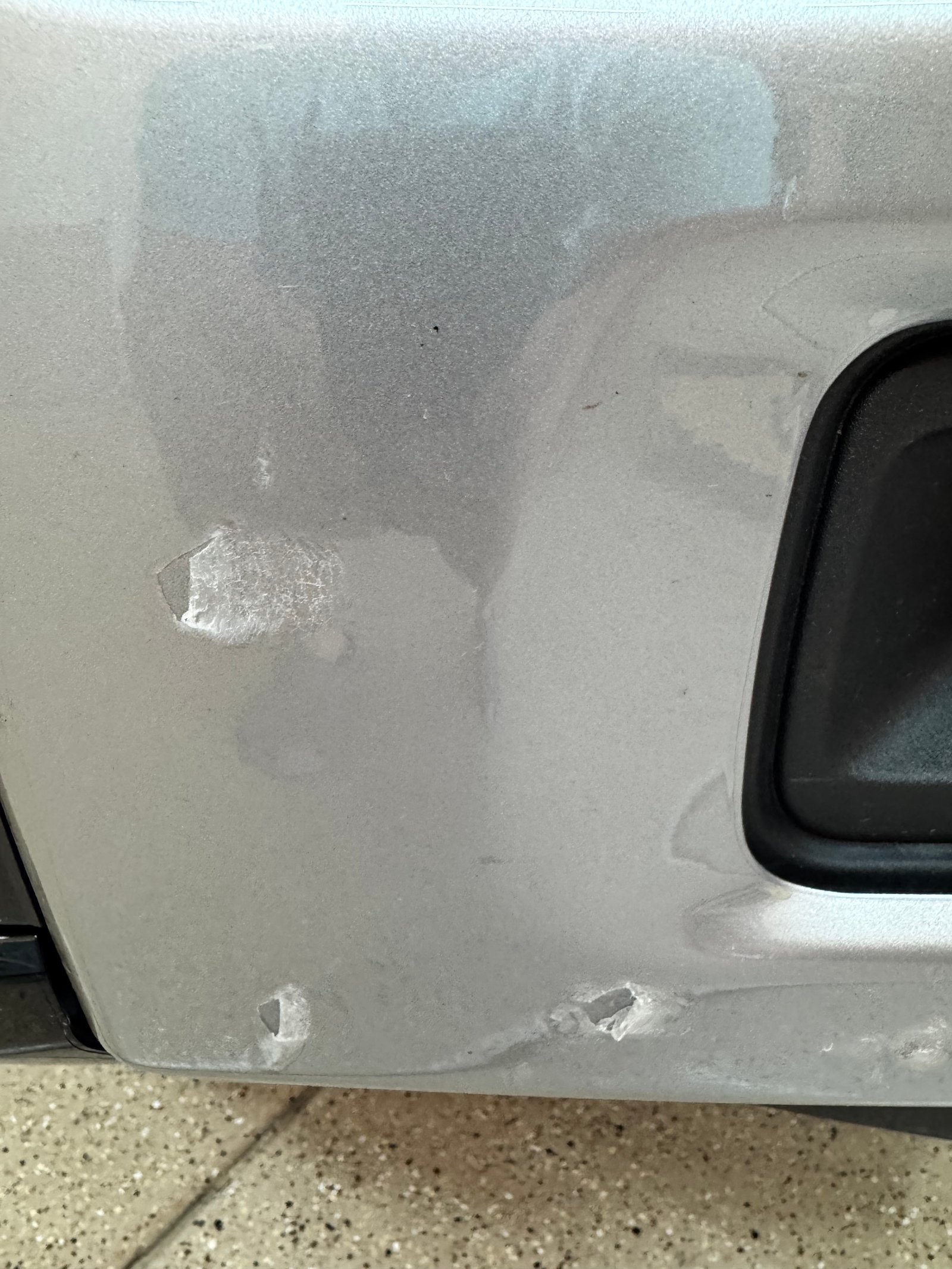
Body shop pricing varies, but the shape of it doesn't. A single panel respray is typically several hundred dollars. A front end — bumper, hood, fenders — runs into four figures without much effort. A full respray on anything worth owning is a serious number.
And that's for a good repair. A cheap one you'll notice every time you walk past it, because the color won't be quite right and neither will the texture.
The comparison isn't protection versus nothing. It's protection versus what you'll spend anyway, later.
Here's what catches people out. A repaint doesn't just cost what the body shop charges — it costs what it does to the vehicle's history.
Repainted panels show up on a Carfax report as non-factory paint. Any buyer running a report sees it, and most read it the same way: this car was in an accident. It doesn't matter that it was rock chips on a hood. The record says the paint isn't original, and that's what gets priced in.
Dealers use the same logic at trade-in, and they're not generous about it. A vehicle with a repainted front end is worth meaningfully less than the same vehicle with factory paint, and the gap is usually larger than the repair cost was.
That's why film gets recommended for the front end specifically. Not because a chip is catastrophic — because the fix for a chip creates a permanent record that a chip itself never would.
UV damage doesn't go on a report anywhere. It doesn't need to — it's visible from across the lot.
A hood that's gone flat, a roof that's hazed, trim that's chalked grey. Every one of those reads as neglect to a buyer, whether or not the vehicle was actually neglected. Two identical trucks, same year, same mileage, and the one that lived in the sun unprotected is worth less. Nobody itemizes it; it's just baked into the offer.
In Arizona this happens faster than most owners expect. Three to four years of driveway parking is enough to see it clearly on a dark vehicle.


Worth saying: that was corrected, not repainted. Correction removes the failed surface layer and brings back the clear coat underneath, and it leaves no record anywhere. A repaint would have fixed the look too — and put a non-factory paint entry on the vehicle's history for good.
There are smaller ones that add up quietly.
Our ceramic coating starts at $1,200 for a sedan, $1,500 for an SUV, van or truck, and $550 for a motorcycle. Film pricing depends entirely on coverage. Neither is small money, and we're not going to pretend otherwise.
What it buys is five to seven years of protection on a coating, with Cerakote carrying a five-year warranty, or a lifetime warranty on GSWF film. Over that period, against the cost of one repaint plus what it does to resale, the comparison usually goes one way.
If you're selling the vehicle within a year, a full coating probably doesn't make sense — a for-sale refresh would do more for you. If the paint is already badly gone, correction may cost more than the coating. And if the vehicle genuinely lives in a garage and does low miles, you have less to protect against. We'll tell you when that's the case.
Protection isn't magic and it isn't insurance. It won't stop everything, and anyone selling it that way is overselling.
What it does is shift where your money goes. Spend it up front on something that prevents damage, or spend it later fixing damage and then again in reduced resale. The second option costs more and leaves you with a vehicle that has a repaint on its record.
That's the whole argument. If it doesn't apply to your situation, we'll say so.
Send a photo and tell us how you use it. You'll get honest pricing and an honest answer about whether it's worth it. Get in touch or text (480) 203-1596.

What UV actually does to a clear coat, and how fast it happens out here.
Read →
What changes when it's 115 degrees, and the mistakes that shorten a coating's life.
Read →
Straight answers on film and coating warranties, including what no film warranty covers.
Read →