
Maintenance
Maintaining a ceramic coating through an Arizona summer
The coating does most of the work. What you do in the other fifty weeks decides whether it lasts three years or seven.
The coating does most of the work. What you do in the other fifty weeks decides whether it lasts three years or seven.
A ceramic coating is not maintenance-free. It's low-maintenance, which is a different thing, and the gap between those two ideas is where most disappointment comes from.
Two identical vehicles coated on the same day can look completely different three years later. Same product, same installer, same conditions. The difference is entirely in how they've been washed — and in Arizona, a few specific habits matter more than they would anywhere else.
This is the one that does real damage and almost nobody thinks about it.
A panel sitting in Arizona sun gets hot enough that water evaporates almost on contact. When that happens, the minerals in the water don't rinse away — they're left behind and baked onto the surface. Do it repeatedly and those deposits etch into the coating.
Wash early morning or evening, in shade, on a cool panel. If the paint is too hot to rest your hand on, it's too hot to wash. That single rule will do more for your coating than any product.
If the paint is too hot to rest your hand on, it's too hot to wash.
Arizona vehicles carry more grit than most. Dust storms, caliche, agricultural dust depending where you are — there's a lot of abrasive material sitting on that paint.
If you go straight in with a wash mitt, you're dragging that grit across the surface. That's how swirl marks happen, and it happens on coated paint just as it does on bare. Hose the loose material off first, always.
Dish soap is designed to strip grease. It will strip the surface properties off a coating too, gradually. Household cleaners, degreasers and anything advertising "wax stripping" belong nowhere near a coated vehicle.
Two buckets if you can — one soapy, one clean for rinsing the mitt between panels. Work top down, so you're not dragging dirt from the rockers up onto the hood.
Water here is mineral-heavy. Left to air dry, it leaves spots that then need removing, which is more work than drying properly would have been.
Clean microfiber towels, or a blower if you've got one. Not an old bath towel, and not the same towel you used on the wheels.
This is the step people skip, and it's the one that extends a coating's life most.
A ceramic maintenance spray adds a fresh layer on top of the coating — restoring water beading and taking some of the wear that the coating would otherwise take itself. It takes about ten minutes over a whole vehicle. Blue Line Shine is ours, made for the job.
Almost certainly not. Water beading softens as a coating ages, while the UV and chemical protection carry on working normally. A maintenance spray brings the beading back. If it doesn't, that's worth a look — but reduced beading on its own is not failure.
Between roughly June and September the rules shift a little.
Nothing here takes long. Written out it looks like more than it is.
Our full step-by-step is in the maintenance guide, including film-specific rules if you've also got PPF.
Bring it by and we'll look at it honestly — including telling you it's fine if it is. Get in touch or text (480) 203-1596.

What UV actually does to a clear coat, and how fast it happens out here.
Read →
The numbers nobody puts side by side — protection versus repair versus resale.
Read →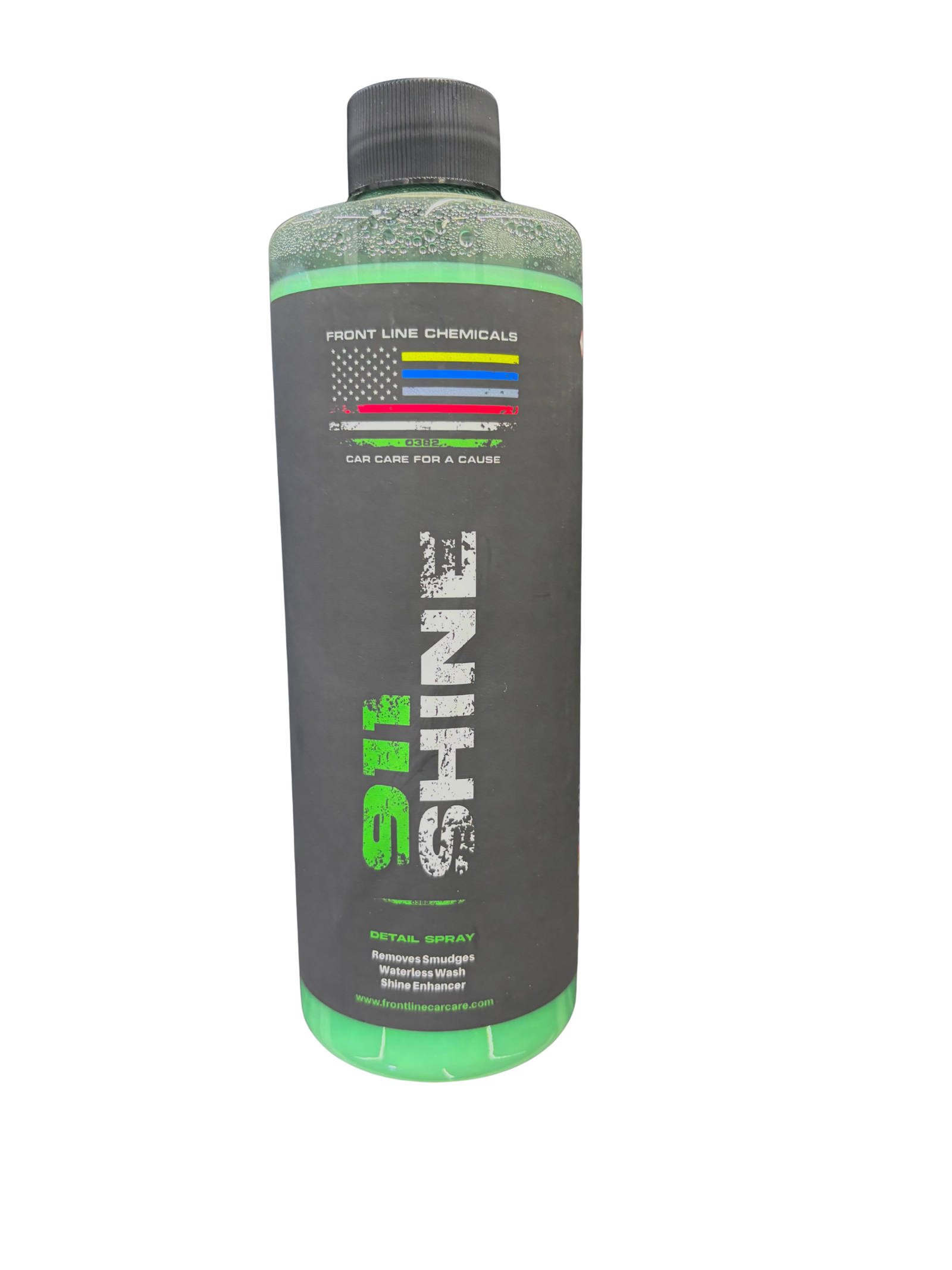
The bottles we use in the shop, all safe on coated paint and film.
Read →